Terms Definition & Meaning
Variable Interest Rate
Variable interest rate summary:
With variable interest rate loans, the interest rate can go higher or lower over time.
Most credit card accounts, most lines of credit, and some mortgages have interest rates that could change. On a mortgage, it’s called an adjustable rate.
Before choosing a variable interest rate, find out how rate changes work and what that could mean for your payments.
Variable Interest Rate Definition and Meaning
A variable interest rate can change over time. The contract you sign with your mortgage lender or credit card issuer will tell you how your interest rate could change. On a credit card, it’s called a variable interest rate. On a mortgage, it’s called an adjustable rate. There are some differences, but they are both interest rates that could change if economic conditions change.
A variable interest rate can have benefits and risks. A variable interest rate could drop if interest rates go down. But if interest rates rise, your rate could also rise. That could mean a larger monthly payment.
Variable rates are based on a benchmark rate. When that rate changes, your rate could also change. For many banks, the benchmark rate is the prime rate. This is the rate banks charge their most creditworthy commercial customers, and it’s the starting point for the rates they charge consumers.
Types of Variable Interest Rate Loans
Here are a few common types of variable interest rate loans and credit accounts.
Adjustable rate mortgages (ARMs)
Some mortgages have an adjustable interest rate. On an adjustable-rate mortgage (an ARM), the rate is typically low for the first few years of repayment. It’s possibly even lower than the rate you could have gotten with a fixed-rate loan at the time you borrowed. After a few years, the rate will adjust. The first rate adjustment is usually upward.
There are limits on how much the rate can rise at any adjustment, and on the maximum interest rate you can be charged overall. Adjustments happen at the frequency spelled out in your loan agreement. For example, a 7/6 ARM is a mortgage that keeps the same interest rate for the first seven years and then adjusts every six months after that.
Credit card accounts
Credit cards almost always have a variable interest rate. The variable rate is based on your assigned rate (typically based on your credit score) plus the issuer’s benchmark rate (the rate that fluctuates based on overall trends).
When you’re approved for a credit card and you accept the offer, you agree to accept a variable rate that could change.
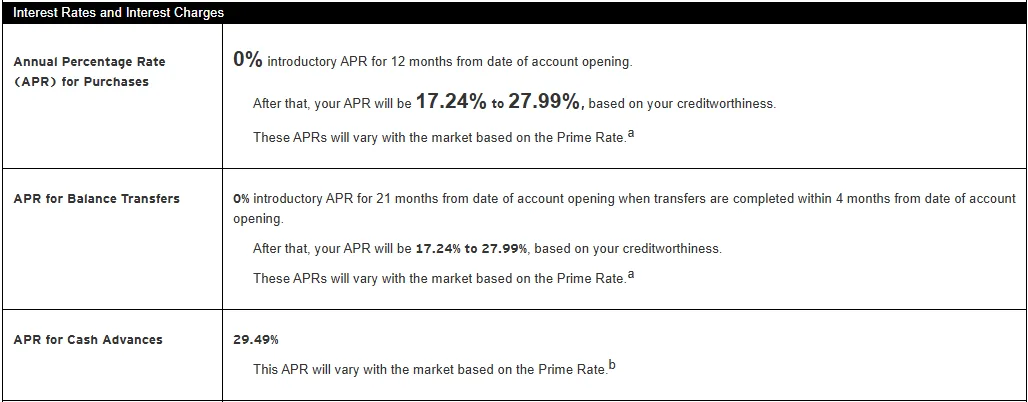
In the example below, your regular interest rate for purchases will be set somewhere between 17.24% and 27.99%. If you then look at the footnotes, you’ll learn that those rates are based on your assigned rate (9.74% to 20.49%) plus the issuer’s prime rate (7.5%). The first part won’t rise without advance notice to you. But the rate you pay for carrying a balance could change any time the prime rate changes.

Home equity lines of credit (HELOCs)
A home equity line of credit loan typically has a variable rate, at least during the borrowing portion.
The way HELOCs work is that for the first few years, you can borrow, repay, and borrow more, up to your limit, as often as you like. This is called the draw period. When the draw period ends, you can’t borrow more. You’ll enter the repayment period.
Typical HELOCs have a variable rate during the draw but may convert to a fixed rate for repayment. Sometimes during the draw, the lender lets you borrow each chunk at a fixed rate. But the next time you borrow, the fixed rate could be different. That would leave you paying different interest rates on different portions of your balance.
Fixed-rate HELOCs are available, but this style of loan is less common. With a fixed-rate HELOC, your rate is set when your line of credit is approved and won’t change for the life of the loan.
Personal lines of credit
A personal line of credit typically has a variable interest rate. It works similarly to a HELOC, but some PLOCs don’t have a draw period. You could borrow, repay, and borrow more indefinitely as long as the account is in good standing.
Variable Interest Rate: A Comprehensive Breakdown
Let’s look at the biggest features of a variable interest rate.
Affordability
Variable-rate loans can be more affordable than fixed-rate loans, especially if we’re talking about mortgages. With an ARM, you might get a lower monthly payment compared to what your payment would be if you took a fixed-rate loan.
Short-term savings
If you’re planning to pay off the debt quickly, you might benefit from a variable interest rate that’s lower than what you could get on a comparable fixed-rate loan. For example, if you plan to sell your home within seven years, it could make sense to get a 7-year ARM with a low rate.
Benefit from future interest rate cuts
Your borrowing costs could go down if interest rates fall and your rate is adjusted downward. You don’t have to refinance your loan to get the lower rate if it adjusts automatically based on market conditions.
Adjustment caps
Many variable-rate loans and credit cards set limits on how much your rate could rise. That provides you with some protection against steep rate hikes.
Unpredictable
Even if you think rates could come down, they might not. There’s an element of unpredictability with variable rates. None of us has a crystal ball to predict future market conditions and interest rates. You might not like not knowing what rate you’ll pay next month or next year. For long-term debts, most people prefer fixed interest rates.
Rates could rise
Interest rates change all the time. It’s reasonable to expect that they’ll rise at some point in the future. If market rates rise, your interest rate will probably also rise.
Variable Interest Rate FAQs
The way to switch from a variable rate to a fixed interest rate is to refinance the debt. That means taking a new loan at a fixed rate and using it to pay off the variable rate debt.
A mortgage with an adjustable or variable interest rate could save you money in the first few years of the loan compared to a similar fixed-rate mortgage.
In other situations, a variable interest rate is the trade-off for convenience. Open lines of credit, such as credit cards and HELOCs, are very convenient for you. You get to borrow whenever you want while the account is open. The trade-off is that you have to accept whatever interest rate the lender sets, based on current market conditions, at any given time.
With this type of mortgage, your first few years of payments are typically going to be lower than you’d get from a similar fixed-rate mortgage. If you think you might sell the home within a few years, or if you're willing to refinance the loan in the future to get a lower rate, choosing an ARM could help make your house payment more affordable.
Related Articles

How Many Credit Cards Should You Have? Either too many or too few credit cards could cost you. Handling credit responsibly is more about how you use your cards than...

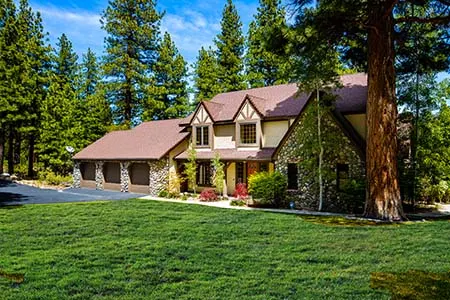
Home Equity: Learn how to calculate home equity, how much home equity can you borrow against, types of home equity loans and about taking home equity out of your house.

If you're in the market for a house or plan to refinance one, you may want to brush up on your mortgage vocabulary to help you make informed choices.

How Many Credit Cards Should You Have? Either too many or too few credit cards could cost you. Handling credit responsibly is more about how you use your cards than...
Home Equity: Learn how to calculate home equity, how much home equity can you borrow against, types of home equity loans and about taking home equity out of your house.
If you're in the market for a house or plan to refinance one, you may want to brush up on your mortgage vocabulary to help you make informed choices.