


Utah Debt Relief by the Numbers: 5-Year Debt Trends
The average Utahn's salary is below the national average, according to an Empower survey of average salary by state. The state's debt relief seekers tend to skew toward the wealthier side. They earn more than $70,000 per year, on average.
They also owe more than the typical American seeking debt relief, with total estimated debts of more than $31,000. While many of these borrowers aren't late on their payments, they can still feel overwhelmed by their financial situation.
Fortunately, if you're in this predicament, you have a lot of options. Here's a closer look at how debt has changed for Utah residents seeking debt relief over the last five years and what you can do to put yours in the rearview mirror.
Utahns can free up cash each month with Freedom Debt Relief

Ozzy S., Freedom client²
“Right away, I had more money each month because of program costs so much less than what I was paying on my minimums.”

5-Year Debt Trends in Utah
Average debt among Utah debt relief seekers has followed a similar trend to people looking for help with debt throughout the country. Debt declined in 2021 and 2022 before rebounding sharply over the next two years. By 2024, the average Utahn seeking help with their debt owed $31,488. This is well above the average of $26,573 for U.S. residents looking for help with debt.
Higher debt brings higher minimum monthly payments. The typical Utahn struggling with debt in 2024 paid $1,969 toward their debt each month compared to $1,717 for debt-relief seekers nationwide.
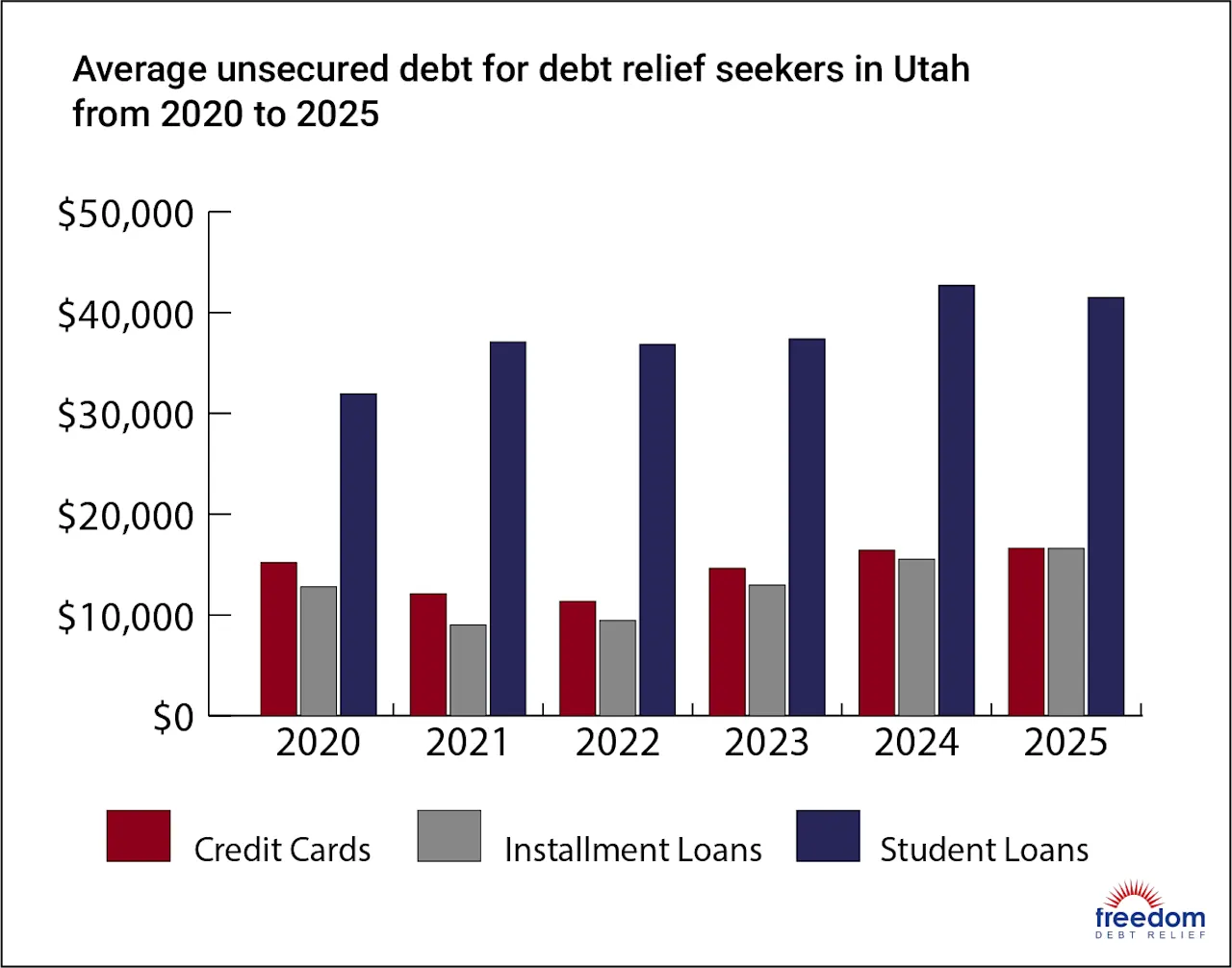
Unsecured debt, like credit card debt and installment loans, is also notably higher for Utah residents looking for help with debt compared to the national average for people seeking debt relief across the country. This is both good and bad news. Unsecured debt often has higher interest rates, but it also opens the door to certain types of debt relief, like debt settlement, that aren't options for secured debt.
Here's a closer look at how different types of debt for Utah residents stacks up to the rest of the nation.
Utah credit card debt
Utah, like many states, saw a decline in credit card debt during the pandemic as people were staying home more and spending less. By 2022, the average credit card balance among Utah debt relief seekers had dropped from $15,199 two years earlier to $11,371. Since then, that trend has quickly reversed.
In 2024, the typical Utahn seeking debt relief had a $16,432 balance spread across 6.4 cards with average monthly payments at $499. This is above the average balance of $14,295 with $487 monthly payments for debt-relief seekers nationwide. Across the country, people looking for help with debt have more credit cards: 7.6.
One reason it's so easy to get in over your head with credit card debt is the low minimum payments, which are usually well within reach, at least at first. Then, high interest rates kick in and balances can grow quickly. This leads some consumers to seek out credit card debt relief programs to get their finances back under control.
Utah auto loan debt
Utah auto loan debt has also risen over the last few years, more slowly than credit card debt. Back in 2020, those seeking debt relief owed $22,773 on auto loans in the state. By 2024, that number was $27,304—just a little above the average of $26,839 for U.S. debt relief seekers nationwide.
Interestingly, Utah debt relief seekers have lower monthly payments than the average U.S. resident seeking debt relief. Utah residents paid just $692 per month on their car loans in 2024 compared to $726 for the nation as a whole. This could indicate that they're choosing longer loan terms. A longer loan term could make monthly payments more affordable, but you’ll usually pay more in interest overall.
Utah mortgage debt
Median home prices in Utah are well above the national average, so it's not surprising that Utah homeowners seeking debt relief owe an above-average amount—$329,660, to be precise. That's more than $88,000 higher than the average for people seeking help with debt nationwide.
These Utah homeowners paid $2,212 per month in 2024 compared to just $1,949 per month for debt-relief seekers nationwide. This can be difficult to squeeze into your budget, even when you consider that the Utahns seeking debt relief have higher annual salaries than the typical debt relief seeker.
Utah installment loan debt
Installment loans, including personal loans, are another kind of debt that's grown quickly among Utah debt relief seekers over the last few years. Back in 2022, the average installment loan balance among this group was $9,451 with monthly payments of $335. In 2024, those numbers had jumped to $15,544 and $411, respectively.
This is well above the national average. The typical American seeking debt relief had installment loan balances of just $10,582 and monthly payments of $436.
Utah student loan debt
The average student loan balance among Utah debt relief seekers has risen by more than $10,000 over the last five years, from $31,958 in 2020 to $42,713 in 2024. Monthly payments are close to double, going from $141 to $248 over that time.
The average balance among student loan debt seekers nationwide is higher. Student loan balances already averaged more than $42,000 in 2020. Balances rose at a slightly slower rate over the last few years. In 2024, the average student loan balance for debt-relief seekers throughout the country sat at $49,861 with average monthly payments of $298.
Utah Debt Delinquencies and Collections
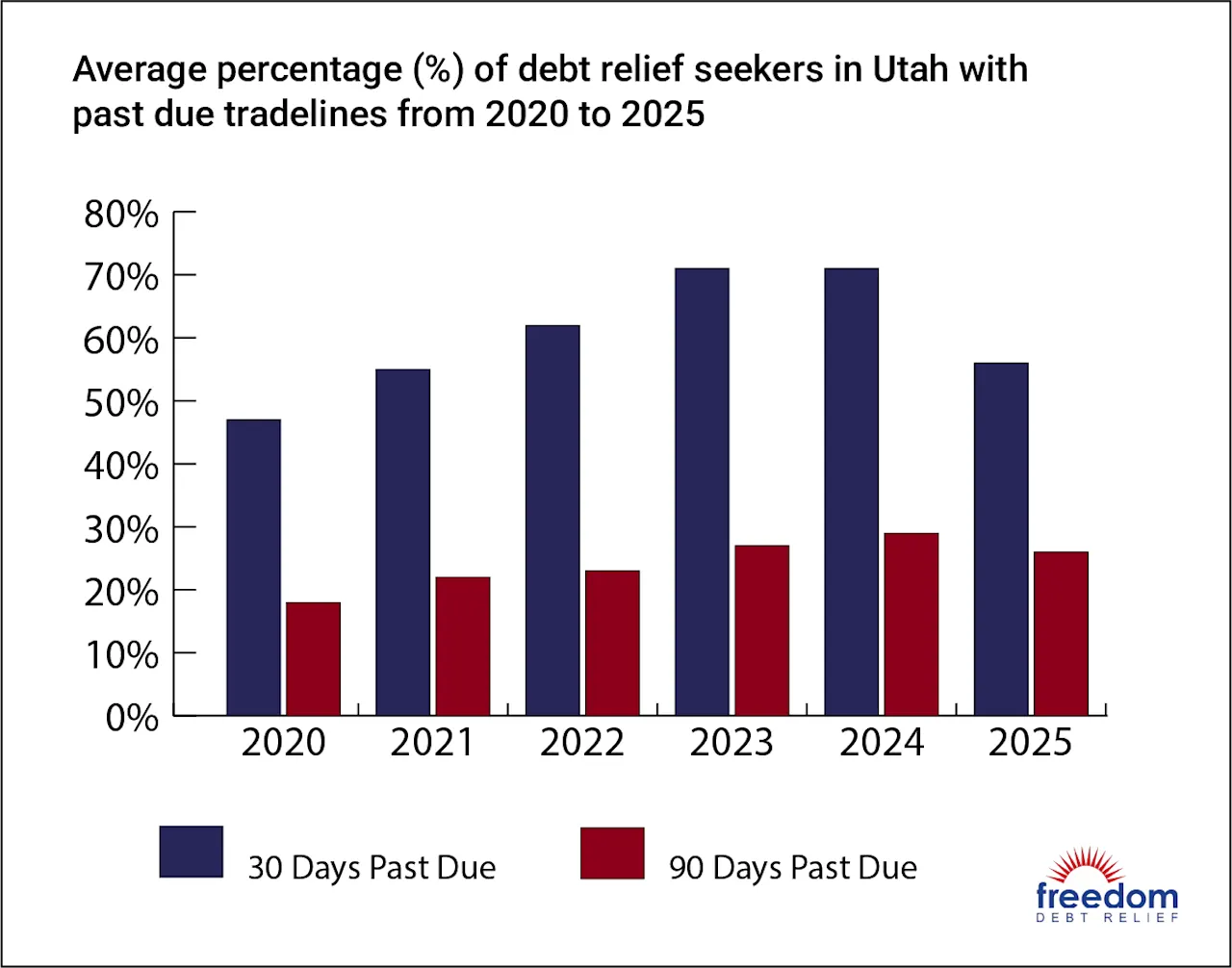
Many Utah debt relief seekers reach out for help before they fall behind on their payments. In 2024, only about 0.7% of them had debts that were 30 days past due, and just 0.3% had debts 90 or more days past due. This is about in line with the average of Americans overall looking for help with debt.
Collection account balances have declined significantly among these Utah borrowers over the last few years, falling from $6,236 in 2020 to $3,721 in 2024. For debt-relief seekers nationwide, collection account balances have remained relatively stable, with minor dips and rises, going from $3,815 in 2020 to $3,183 in 2024.
The average number of accounts in collections in the state has also declined among debt relief seekers from 5.5 to 2.0, suggesting that many more borrowers are taking proactive steps to avoid their accounts going into collections.
When debt is in collections, most of it is past due. The typical Utahn reaching out for debt relief in 2024 had a past-due balance of $3,688. Sometimes it's possible that debt may not be collectible, even if you technically owe it. That's why it pays to understand the state's statute of limitations and debt collection laws.
Utah Statute of Limitations
The statute of limitations is the amount of time a debt collector has to sue you over an unpaid debt. After the statute expires, the debt collector doesn’t have the right to pursue you for payment. (That doesn’t mean they won’t try.)
Here's a closer look at the statute of limitations for different types of debt in Utah:
UT Statute of Limitations for Debt
| Type of Debt | Statute of Limitations |
|---|---|
| Written agreements | 6 years |
| Verbal agreements | 4 years |
| Installment accounts (i.e., store charge accounts) | 4 years |
There's also an eight-year limit on enforcement of a judgment. This means that if a court orders you to pay your creditor, the creditor has eight years to enforce this repayment. Important: In Utah, a creditor can renew a judgment for another 8-year term. As long as they renew on time, they can renew indefinitely.
What are the Utah debt collection laws?
Utah borrowers who find themselves dealing with a collections agency are protected by the Fair Debt Collection Practices Act (FDCPA). This is a federal law that regulates what debt collectors can and can’t do. Among other things, debt collectors can’t:
Threaten to harm you or your family
Threaten legal action they don't plan to take
Share information about your financial situation with people other than your spouse
Contact you more than seven times in seven days about your debt
Contact you for seven days after speaking to you on the phone about your debt
Reviews and Testimonials from Utah
She was really friendly and helpful
Keith, US

Love this program!
Diane Roussell, US
Freedom debit relief has been very good for me getting out of Debt due to financial and health hardship I've recommended them to 3 other folks and as far as I know they've sign up and doing well Everett l williams of Las vegas
Everett Williams, US
Utah Debt Relief
If you’re experiencing financial hardship, borrowers in Utah have several programs and resources to check out.
You can look for debt relief through these Utah resources for residents:
Department of Workforce Services. Financial assistance programs are designed to help state residents increase their income and become financially independent. As well as financial benefits for low-income residents, the department has personal support and one-on-one guidance. Offers Temporary Assistance for Needy Families (TANF), General Assistance (GA) for households without dependent children, and unemployment insurance.
Utah Community Action. For over 50 years, the Utah Community Action has been meeting the needs of the community, especially those experiencing poverty. They can help you access HEAT Utility Assistance, home weatherization resources, and workforce development programs.
211 Utah. Call 211 or visit 211utah.org for a database of local assistance for rent, utilities, and food.
Debt settlement, sometimes referred to as debt relief, is one possible strategy for dealing with unmanageable debt. Debt settlement means negotiating with your creditors to get them to accept less than what you owe and consider it full payment. This only works for unsecured debts—debts that aren’t backed by collateral, like your home or car. Examples of eligible debts include credit card balances, medical bills, and most personal loans.
As part of the process, you typically stop making payments to your creditors and divert those funds into a separate dedicated account that you control. When you've set aside enough, you or your debt settlement company make your creditor an offer. If the creditor accepts, you satisfy the agreement and then it’s resolved.
In 2024, 1,377 Utah residents seeking debt relief got help from Freedom Debt Relief, a professional, experienced debt relief company. The average enrolled debt was $26,826.
If you think debt settlement could be the right option for you, you can schedule a free consultation with Freedom Debt Relief to learn how it works. A debt consultant will listen to your situation without judgment and help you come up with a strategy for regaining control of your finances.
Debt settlement may negatively impact your credit.
Is Debt Consolidation the Best Solution?
Debt consolidation is another debt relief strategy that works well for those with good to excellent credit. You take out a new loan and use it to pay off your existing loans. Debt consolidation could reduce your monthly payment and possibly save you money, especially if your credit has improved or interest rates have dropped since you first took out your loan.
If that doesn't seem like a good fit for your situation, you could try other strategies to get rid of your debt, including:
DIY debt payoff. Strategies like the debt snowball and debt avalanche could help you pay off credit card debt simply by changing how much you pay toward each debt monthly.
Debt management plan. Credit counselors offer debt management plans (DMPs) that could help you pay off your debts. Counselors from a nonprofit credit counseling agency may also be able to negotiate with your creditors for lower interest rates or reduced fees. You pay the credit counselor, and it pays your creditors each month. The monthly payments can be high.
Bankruptcy. Bankruptcy could help you get rid of your debts, sometimes as quickly as a few months. Chapter 7 bankruptcy may require you to sell some of your possessions, and there are income limits on who can use it. Chapter 13 bankruptcy is a three- to five-year payment plan.
Utahns can free up cash each month with Freedom Debt Relief
Ozzy S., Freedom client²
“Right away, I had more money each month because of program costs so much less than what I was paying on my minimums.”
Frequently Asked Questions
Is there really a debt relief program from the government?
Government debt relief programs are only available for federal student loan debt and tax debt. Other types of debt, such as credit card debt, don’t qualify for government debt relief. A legit company shouldn’t claim there’s a government debt relief program for any debt other than student loan or tax debt.
Is it worth doing a debt relief program?
It could be. If you’ve been through a financial hardship and don’t have a way to repay what you owe in unsecured debt (like credit cards, personal loans, and medical bills), a debt relief program could be worth exploring. You do need to be able to afford a monthly payment to build up funds to offer creditors to settle debts. If you can’t manage any payment, Chapter 7 bankruptcy may be a better fit for you.
How long before a debt becomes uncollectible in Utah?
This depends on the type of debt you have. Typically, written contracts have a six-year statute of limitations while other types of debt have a four-year limit.
End Your Debt
Find out how our program could help.
- One low monthly program deposit

- Settlements for less than owed
- Debt could be resolved in 24-48 months