Personal Finance Definition & Meaning
Emergency Fund Definition & Meaning
Emergency fund summary:
An emergency fund is money you set aside to cover unexpected expenses.
Ideally, you want at least three months of living expenses in your emergency fund. That means enough money to live on with no income at all for at least three full months. Most people start smaller and work their way up.
Keep your emergency fund where you can access it quickly. A high-yield savings account is a great option.
What Is an Emergency Fund?
An emergency fund is money you keep on hand to cover financial emergencies, like an ER visit or a car repair. Usually you keep this money in a savings account, so it's close at hand when you need it.
Any amount of money in an emergency fund is better than none.
For example, if you have a car, you’ll eventually need to replace the tires. Could you afford to buy two or four new tires if you needed them today? If you don’t have an emergency fund yet, that amount is a great first milestone to strive for.
A fully funded emergency fund would have enough money for you to live on with no other income for at least three months. But most people start with a smaller goal and work their way up.
Emergency Fund: A Comprehensive Breakdown
Emergency funds are intended to help you bridge the gap when unplanned expenses arise or when your income unexpectedly drops.
If you have two or more sources of reliable monthly income—a job, alimony, pension, side gig, another working adult in the home—three months of living expenses in your emergency fund is a healthy reserve.
If you’re a high earner or you’re the only earner in your household, you might need more than three months’ worth of cash.
Think about it this way. For many people, it takes three to six months to find a new job. Create an emergency fund that’s big enough to help you stay afloat financially for that entire time.
Building your emergency fund
Your savings goal is based on how much money you need each month. What counts as part of your monthly living expenses is up to you. You'll want to include the budgeting basics like groceries, your rent or mortgage payment, utilities, insurance, transportation, debt payments, your phone, and childcare. You get to decide whether to include extras like streaming services, restaurants, and travel. If you do, you’ll need to save more money. When you’re planning ahead for a financial surprise, consider canceling or pausing certain expenses.
If you're just starting your emergency fund, set the goal to save a regular amount of money each month toward your first milestone.
Maintaining your emergency fund
When you take money from your emergency fund for unplanned expenses, do your best to replenish it as soon as possible. Set aside whatever you can spare monthly until you've gotten your emergency fund back to where you want it to be.
Revisit your emergency fund annually or whenever you experience a major life change. If you add a new family member, for example, your expenses may go up, which means you might want to increase your emergency fund as well.
Emergency Fund FAQs
Keep your basic emergency fund in a no-fee savings account, separate from your other money but easy to access when needed (not just during business hours). A high-yield savings account is best, but the first priority is to make sure the money is accessible if you need it. If you have to wait two or three business days to transfer money from savings into your checking account, consider these options:
Set up your checking account at the same bank
Use a bank that will give you a debit card for easy access to your funds
Try to save the first $1,000 within six to 12 months. Be aggressive and make sacrifices. Challenge yourself to make a budget, look for ways to save, and set milestones to reach and celebrate.
Here’s how one family of four might do it if their goal is to save $2,500.
Drag everything unneeded out of the closets and sell it, netting $700
Give up two subscriptions: $40 per month
Shave 10% off the grocery bill: $60 per month
Switch mobile plans: $50 per month
Cut one restaurant dinner out: $100 per month
Cut 10% of driving: $25 per month
Goal reached in less than seven months.
Paying off debt is the first priority, but having some money saved for unplanned expenses can help keep you from going further into debt. A good rule of thumb is to save a modest amount, say $1,000 or $1,500, and then focus on paying down your debts. The third step would be to increase your emergency fund.
Related Articles
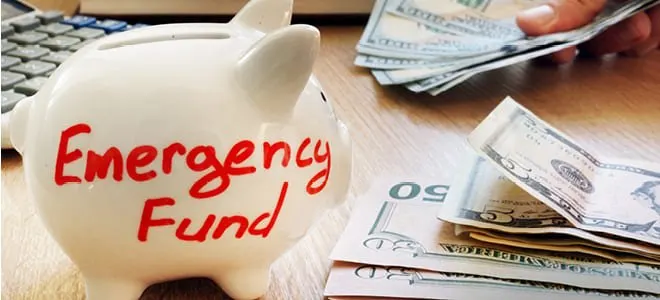
Learn exactly how to start an emergency fund, where to keep it, and how to keep it going.


An emergency fund gives you peace of mind and it could help you stay out of debt. Read more to learn how to build one.


If you're struggling to get a handle on your household budget, keep in mind that there are always ways to save more money. Read our savings ideas here.

Learn exactly how to start an emergency fund, where to keep it, and how to keep it going.
An emergency fund gives you peace of mind and it could help you stay out of debt. Read more to learn how to build one.
If you're struggling to get a handle on your household budget, keep in mind that there are always ways to save more money. Read our savings ideas here.