


Deep in debt, borrowers are cutting back but still struggling
ByKat Tretina
UpdatedOct 1, 2026
- Many borrowers are treading water or falling behind: Of those with substantial debt, 28% can only afford to make the minimum-required payments, while 20% are behind on at least one account.
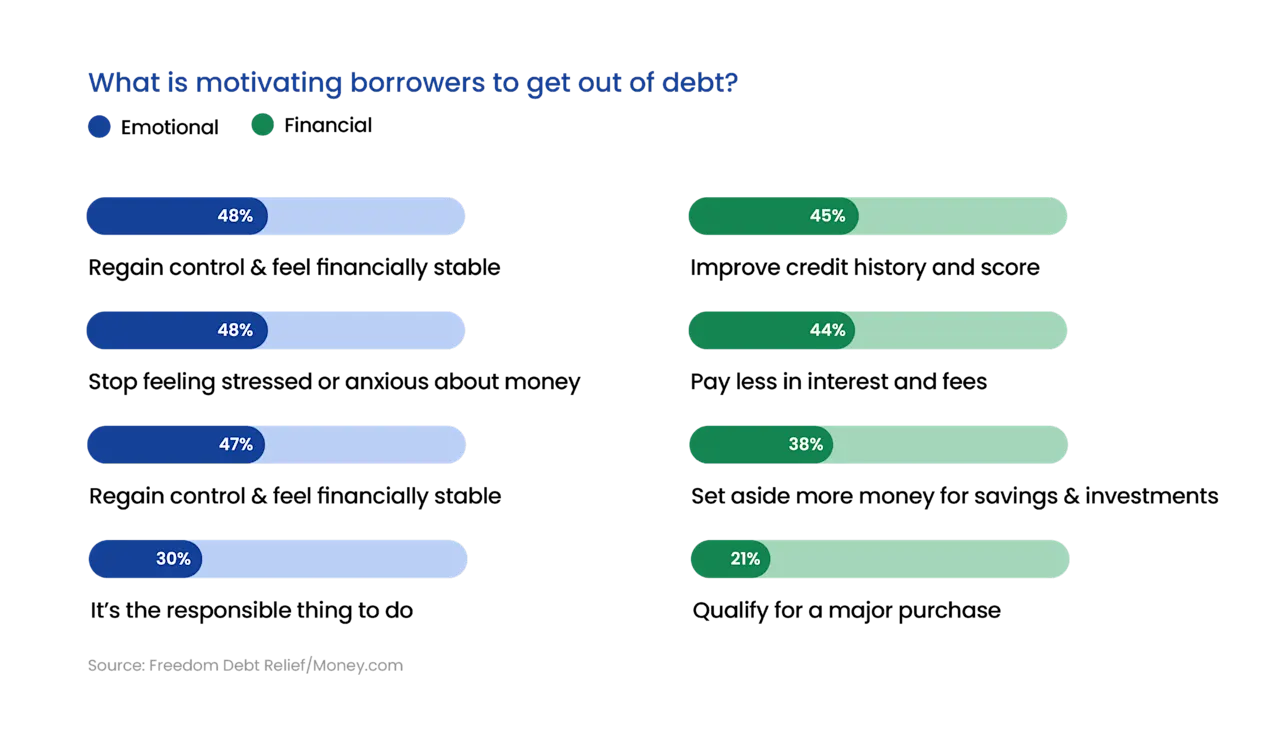
- The desire to reduce debt is both financial and emotional: People with debt reported that their main motivation to pay it down was to regain control and to feel financially stable (48%), and to reduce money-related stress and anxiety (48%).
- Although respondents are willing to make significant changes to their lifestyles, they want some wiggle room in their budgets: Respondents commonly report cutting eating out (41%), nonessential online shopping (40%) and switching to generic grocery and household supply brands (35%).
- Borrowers are also open to short-term financial tradeoffs: Nearly 4 in 5 respondents would accept a drop in their credit score in exchange for becoming debt-free faster.
- Extra cash would mostly go toward financial security: Most respondents said they would use extra cash to accelerate debt repayment, while 48% would build their emergency funds.
Table of Contents
- Making payments doesn’t necessarily mean making progress
- High interest can keep borrowers feeling stuck
- Getting out of debt is about more than fixing finances
- Debt management shows up in borrowers’ daily routines
- Daily routine changes to pay down debt
- Extra cash is about survival and security, not splurging
- Borrowers want breathing room — and a path forward
- Borrowers are trying a wide range of debt relief options
- Borrowers are willing to trade credit score for speed
- Negotiation is seen as a safe strategy, but many struggle to follow through
- FAQs
Free up cash each month with Freedom Debt Relief
Ozzy S., Freedom client²
“Right away, I had more money each month because of program costs so much less than what I was paying on my minimums.”


Debt is more than just a numbers problem. For Americans carrying substantial amounts of unsecured debt — including credit card bills — the burden can shape everything from everyday spending to stress levels, relationships and long-term financial goals.
To better understand how heavily indebted borrowers cope, Freedom Debt Relief and Money.com surveyed people with at least $10,000 in unsecured debt about their payment habits, motivations and debt-reduction strategies.
The survey reveals that borrowers are highly motivated to improve their finances and willing to cut back. But many are still struggling to get ahead and achieve long-term financial stability.
“There’s a tendency to assume that people get into, and stay in, debt because they aren’t willing to change their habits,” said Freedom Debt Relief President Sean Fox. “What this research shows is a much more complicated picture. Many people are already making difficult tradeoffs and actively looking for a way to improve their financial situation, yet they’re still struggling because they don’t know where to start or which strategies are best for their specific situation.”

Making payments doesn’t necessarily mean making progress
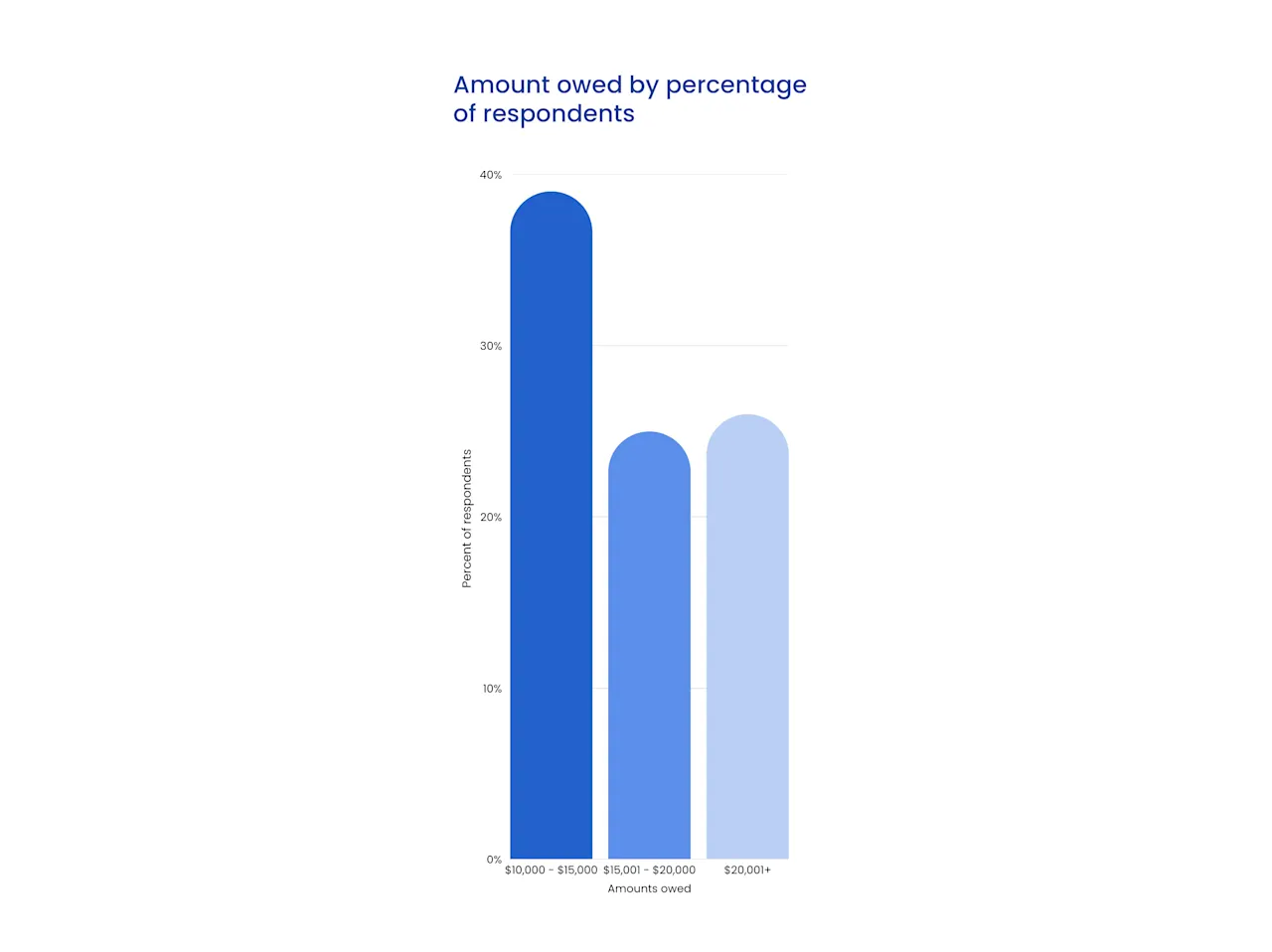
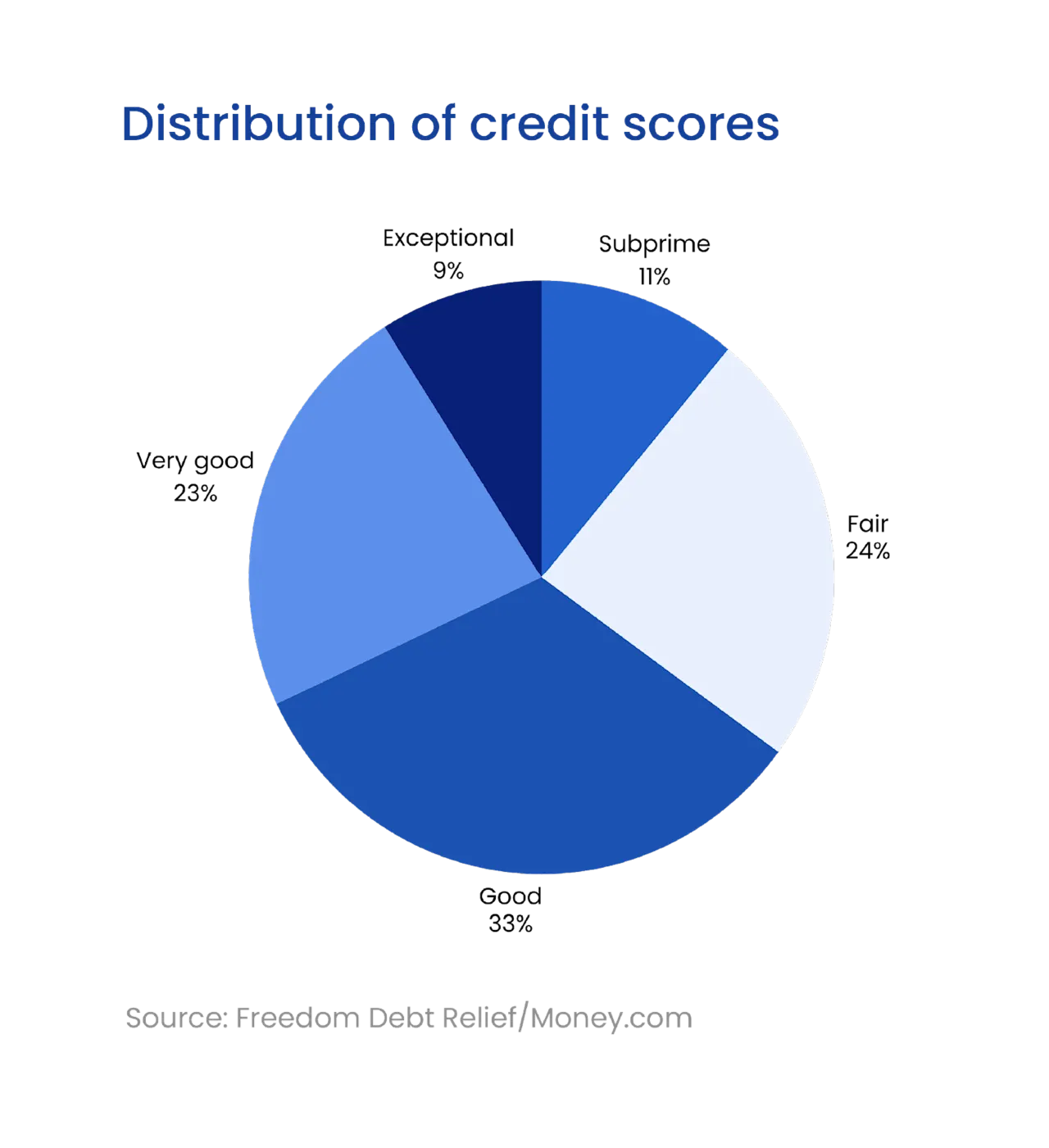
Borrowers in this survey are carrying substantial debt, often spread across multiple accounts. Nearly 40% owe between $10,000 and $15,000 in unsecured debt, while 36% owe more than $20,000. About two-thirds of respondents owe money on three or more accounts, and one-third owe on five accounts or more. Yet many have solid financial profiles: 65% report good or better credit, and 37% earn at least $100,000 a year.
Still, keeping up with debt is a challenge. More than one-quarter of respondents (28%) say they can consistently make only the minimum payments, leaving little room to make meaningful progress. That figure rises to 36% among Gen Z and 34% among millennials. Another 20% of respondents are behind on at least one account, while 4% aren’t sure where all their debts stand. Only 47% say they are paying more than the minimum on at least one account.
High interest can keep borrowers feeling stuck
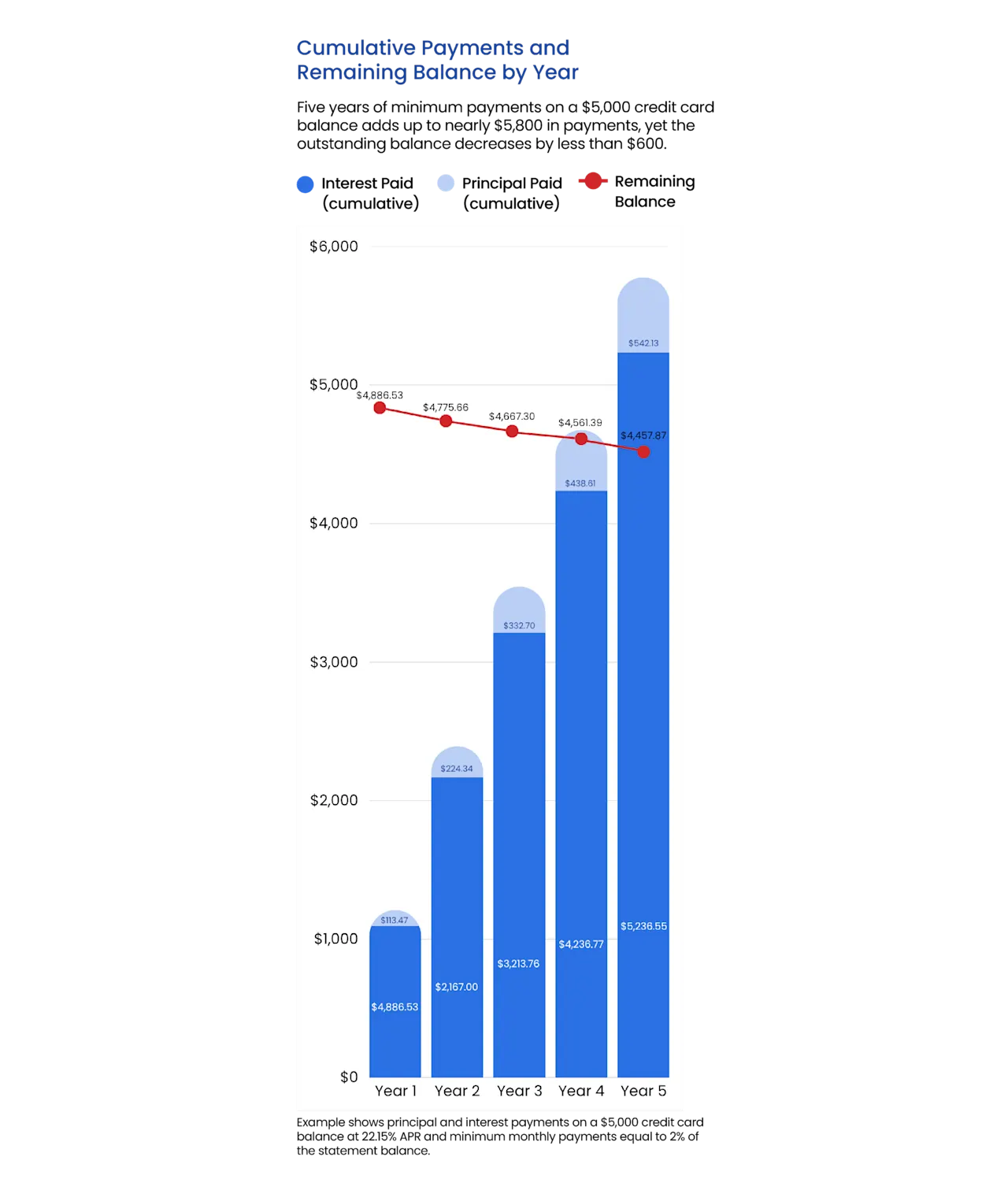
Interest makes it harder to get ahead, especially when borrowers can only afford to make the minimum payment each month.
For example, say you had $5,000 in credit card debt. As of May 2026 — the last available data from the Federal Reserve — the average annual percentage rate (APR) on credit cards that assessed interest was 22.15%. Assuming you have a $100 minimum payment and made no more purchases, it would take nearly 12 years to pay off the card, and you’d repay a total of $14,012. Interest charges would add over $9,000 to your total repayment cost.
Getting out of debt is about more than fixing finances
Numbers and interest charges are only part of the story. When people begin working on getting out of debt once and for all, their reasons are often more emotion-based. Nearly half of survey respondents said they wanted to stop feeling stressed or anxious about money, and 30% said they were motivated to pay down debt to improve their physical or mental health.
When it comes to generational differences, older borrowers tend to be more financial-focused than younger borrowers. Approximately 55% of Baby Boomers are more likely to cite paying less interest and fees as a primary motivator, compared to just 35% of Gen Z respondents.
Debt management shows up in borrowers’ daily routines
For most respondents, managing debt has meant making a series of smaller, everyday tradeoffs rather than dramatic lifestyle changes. The most common reported cutbacks involve flexible expenses such as dining out, online shopping and travel. Comparatively few respondents said they had made major changes, such as moving in with family members or selling a car.
What stands out is how closely respondents’ actual behavior matches what they say they would be willing to do for a year to significantly reduce their debt. That suggests many borrowers may already be making the sacrifices they consider realistic.
There were a couple exceptions: Taking on a second job or side gig was one of the top responses when borrowers were asked what they’d be willing to do, with nearly a quarter of respondents saying they’d be open to that compared with only 15% who had already done it.
Daily routine changes to pay down debt
41% stopped eating out or ordering food delivery
40% stopped nonessential online shopping
35% switched to generic groceries and household supplies
31% sold unused items
28% canceled vacations or travel
24% bring lunch from home every workday
20% buy less meat or choose cheaper proteins
Extra cash is about survival and security, not splurging
When asked about what they’d do if they had more room in their monthly budgets, most respondents said they’d use that cash to shore up their finances.
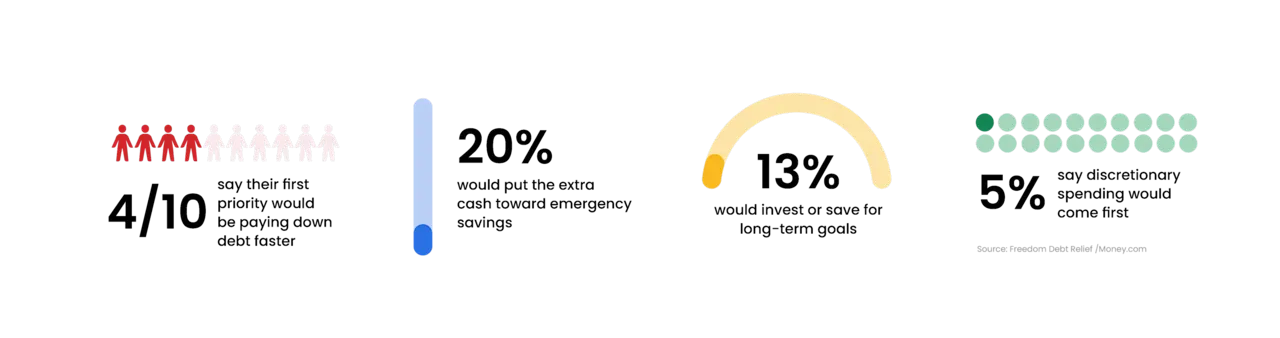
More than 4 in 10 respondents say their first priority would be paying down debt faster, making it the most common answer by a wide margin. About 20% would put the extra cash toward emergency savings and an equal share said they’d use it to cover basic living expenses. In addition, 13% would invest or save for long-term goals.
Only 5% say discretionary spending would come first. People with debt aren’t looking for extra cash to upgrade their lifestyle or make splurges. They’re primarily looking to improve their financial security.
Borrowers want breathing room — and a path forward
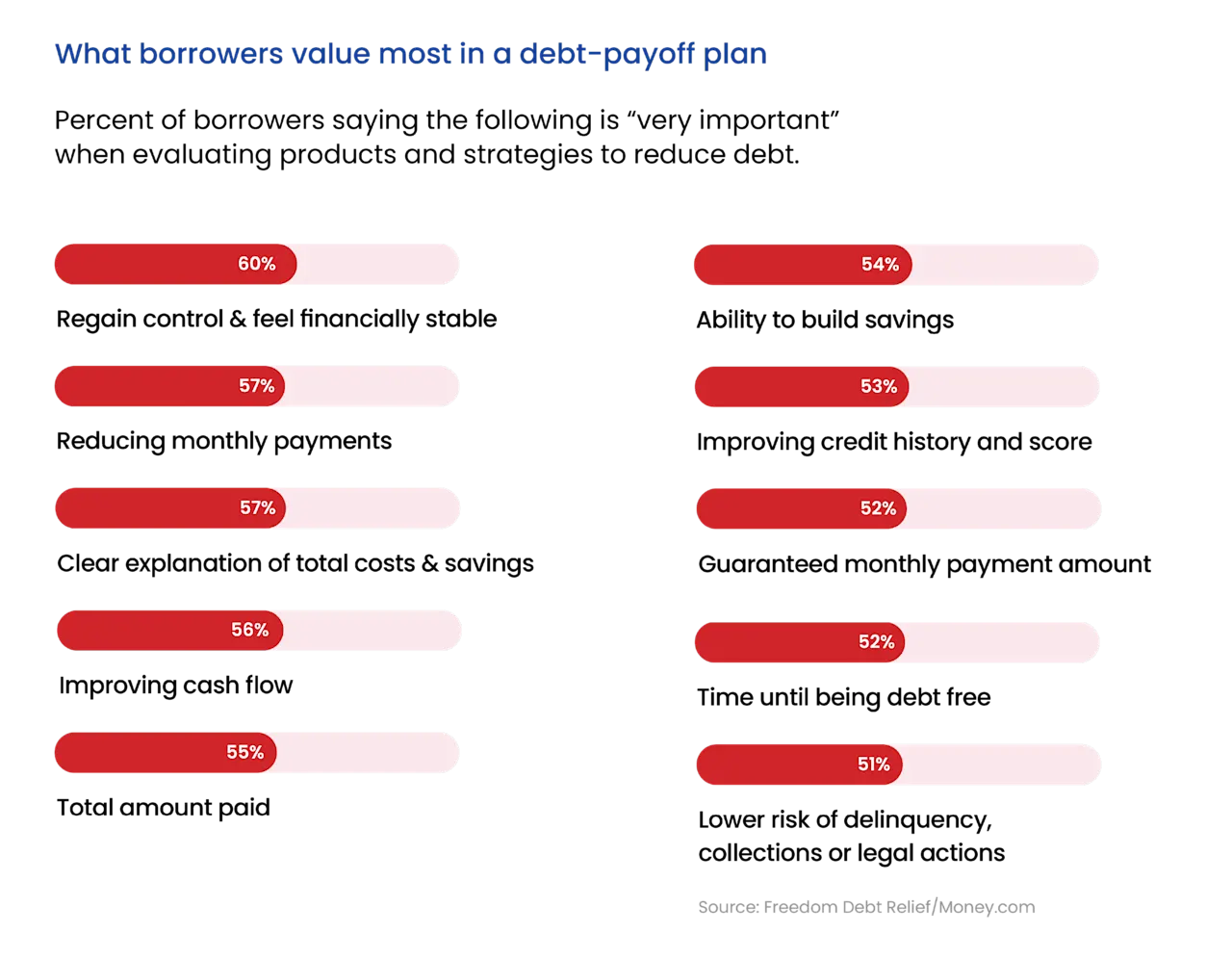
When considering how they’re managing their debt — and ultimately how they can pay it off — borrowers aren’t just looking for the cheapest option. Instead, they want immediate relief in their monthly cash flow and a clear timeline for a path forward.
To that end, 60% said they want an option that reduces stress, making it the most common priority. Reducing monthly payments (57%), improving cash flow (56%) and improving credit history and credit score (53%) were also frequently rated as very important.
Ultimately, borrowers want to know what they’ll pay, how long it will take and that they won’t be financially at risk in the meantime. The focus is on predictability combined with significant relief.
Borrowers are trying a wide range of debt relief options
Borrowers are taking action. Three-quarters of respondents say they are at least somewhat confident they’re using the best possible approach to manage debt, and many report trying multiple strategies.
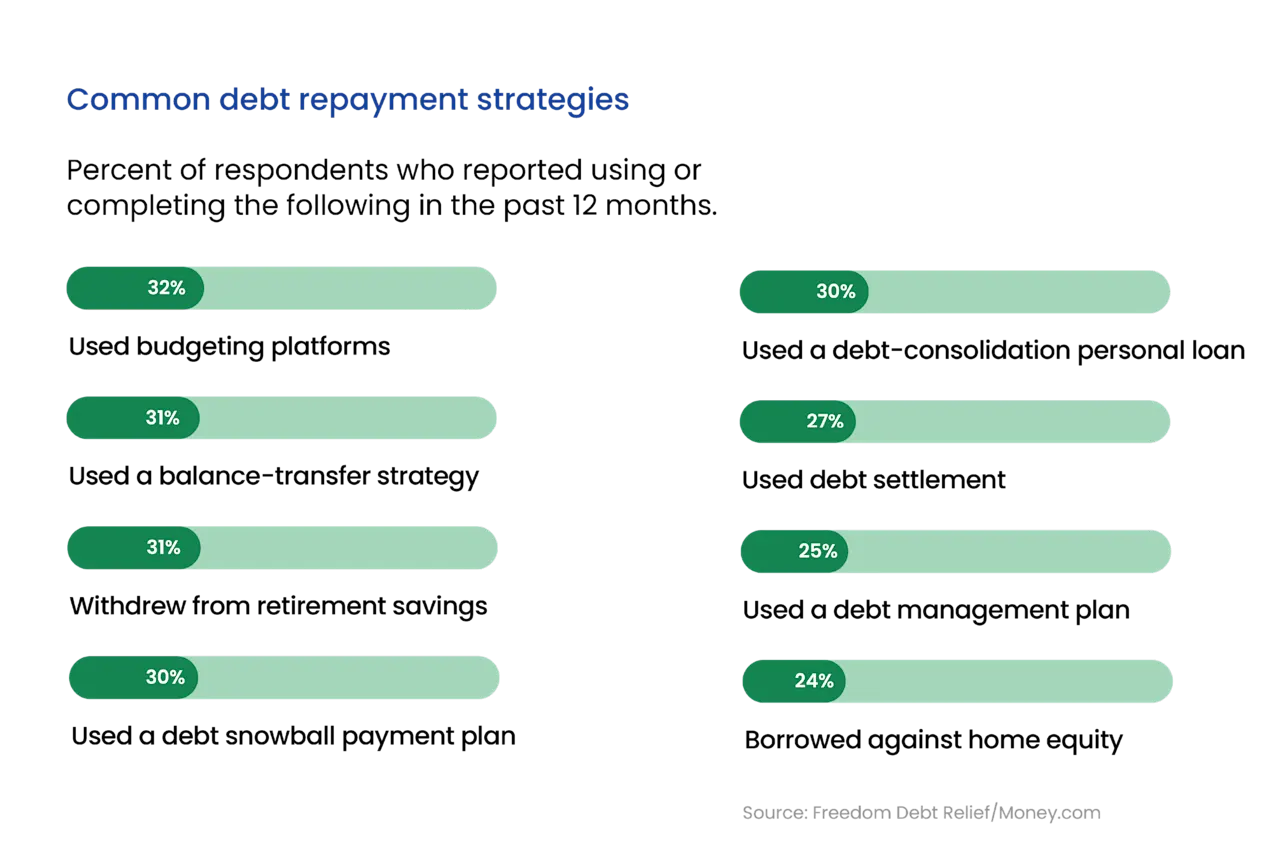
Some of those choices come with bigger trade-offs. Nearly one-third say they have withdrawn from retirement savings to pay down debt in the past 12 months, while 24% have borrowed against home equity to consolidate debt.
Younger borrowers are especially likely to have tried multiple strategies, such as balance transfers, credit counseling or a debt management plan, to tackle their debt which may reflect the financial pressure they’re under. The data also suggests that no solution dominates the market — or works for all borrowers.
Borrowers are willing to trade credit score for speed
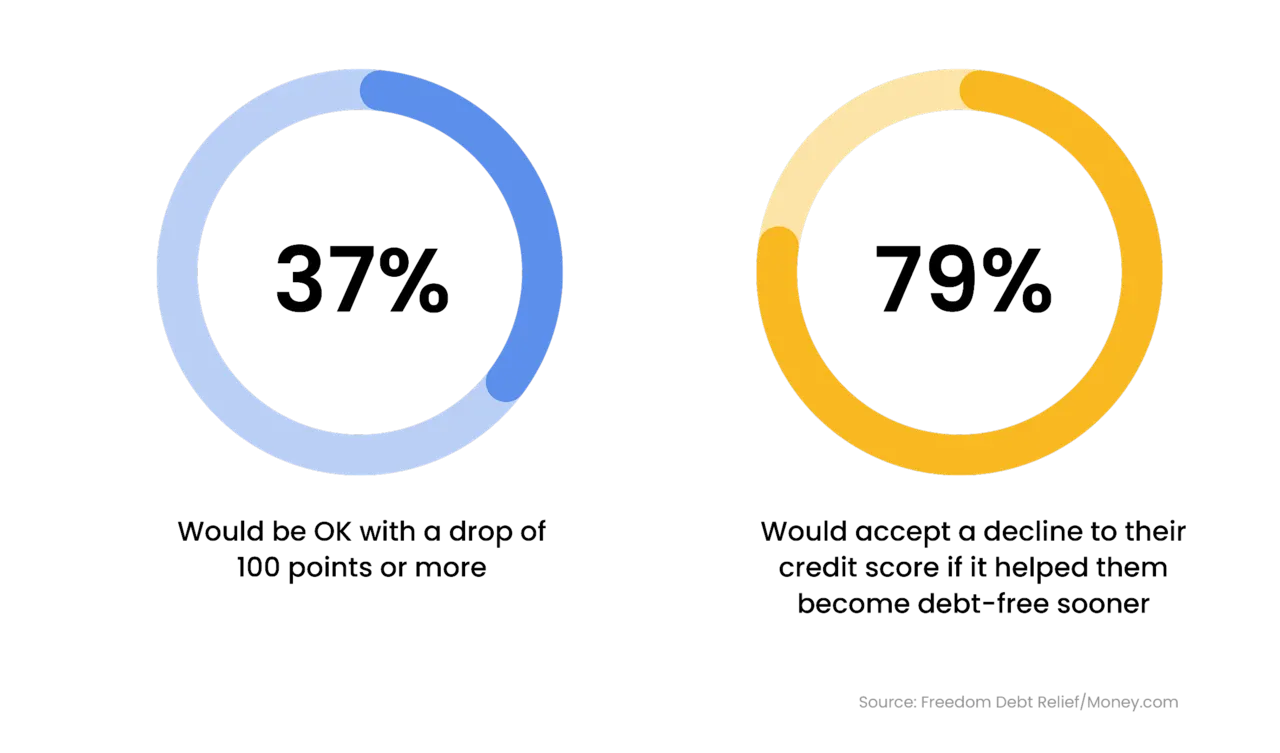
Borrowers care about their credit scores, but many are willing to sacrifice points if it means getting out of debt faster. More than half of respondents said improving credit was a very important factor when evaluating debt solutions. Yet 79% would accept a decline to their credit score if it helped them become debt-free sooner.
More than a third (37%) would be OK with a drop of 100 points or more, showcasing how faster relief outweighs protecting credit in the short term for many heavily indebted borrowers.
Negotiation is seen as a safe strategy, but many struggle to follow through
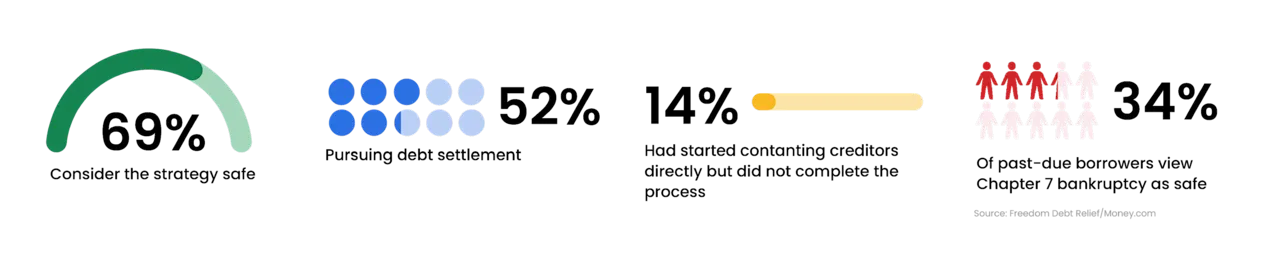
Borrowers view negotiating directly with a credit card issuer as one of the safer ways to tackle debt. Over two-thirds (69%) consider the strategy safe, compared with 59% for enrolling in a debt management plan offered by a credit counseling agency and 52% for pursuing debt settlement.
But negotiating may be easier in theory than in practice. The survey found 14% of respondents said they had started contacting creditors directly but did not complete the process, one of the highest non-completion rates among the strategies included in the survey. Confidence is also mixed: about half say they feel somewhat or very confident speaking with creditors.
How risky a strategy appears also depends on a borrower’s repayment status. Those who have past-due or missed payments are more likely to view debt settlement as a safe option, and 34% of past-due borrowers view Chapter 7 bankruptcy as safe. More consequential options look increasingly reasonable after borrowers start falling behind.
FAQs
What percentage of borrowers are behind on their debt payments?
About 1 in 5 borrowers with at least $10,000 in unsecured debt are behind on their payments for at least one account, according to a 2026 survey by Freedom Debt Relief.
What are the key motivations to pay off debt?
Heavily indebted borrowers surveyed by Freedom Debt Relief say their top motivations are regaining control and financial stability, and reducing stress and anxiety.
Is debt settlement a safe strategy?
About 52% of respondents to a 2026 Freedom Debt Relief survey said debt settlement was a safe strategy. Those who are already past-due on their accounts are more likely to say it’s a safe approach.
Methodology
The data presented are based on a joint Freedom Debt Relief and Money.com survey fielded in July 2026. The respondent sample consisted of 1,800 U.S. consumers ages 18 and up who reported having at least $10,000 in unsecured debts, not including student loans.
Author Information

Written by
Kat Tretina
Kat Tretina is a personal finance writer and certified student loan counselor based in Orlando, Florida. Dedicated to helping people build a solid financial foundation, she has written about debt repayment, investing, and insurance—including pet, life and car insurance —for major publications. Her work has been published by The Huffington Post, Business Insider, Credit Karma, and more.